Possessions, memory, and loss
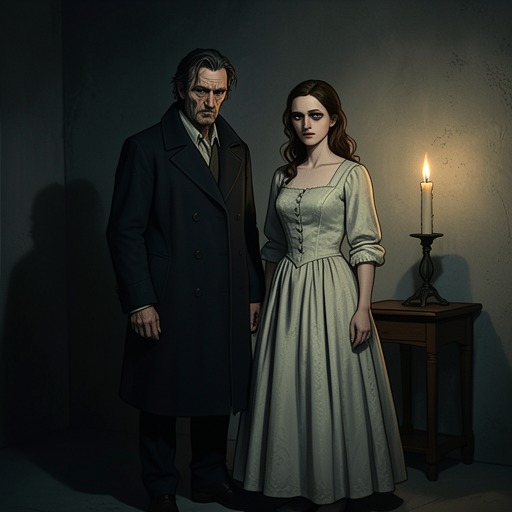
A Gentleman in MoscowPossessions, memory, and loss form a recurring pattern in A Gentleman in Moscow: objects preserve the marks of former lives, yet their presence cannot undo separation or restore what history has taken. Count Alexander Ilyich Rostov encounters this tension as he leaves his family estate, makes a reduced home inside the Metropol, passes an heirloom to Nina, mourns Mishka, and finally returns to the ruins of his childhood home. The objects matter not because they can bring the past back intact, but because they give memory something tangible to touch—and sometimes show where its power ends.
The Cost of Leaving
When news arrived that the Tsar had been executed, Count Alexander Ilyich Rostov left Paris for Russia. His journey took more than twenty days and crossed six nations, past eight battalions fighting under five flags. He reached Idlehour Estate on August 7, 1918, with only a rucksack. The contrast between that spare arrival and the family possessions he would later bring to his hotel suite gives material form to upheaval: belongings survive, but only after selection, transport, and loss.
At Idlehour Estate, Count Alexander Ilyich Rostov arranged for Countess Rostov to leave the country. She understood that she would travel with just two servants, though all were prepared to accompany her, and that her grandson and only heir would remain behind. Their parting without tears recalled an earlier lesson she had given him as a child: after he lost at draughts and scattered the pieces in anger, she urged him not to give his opponent the satisfaction of seeing his distress. The estate then had to be shuttered. Chimneys were swept, pantries cleared, furniture shrouded, and the dogs, horses, and servants released from their duties. Count Alexander Ilyich Rostov loaded some of the family’s finest furniture onto a single wagon, locked the doors, and set out for Moscow.
Years later, as he prepared to abandon his hotel suite, he inventoried what remained. The things he had brought there four years earlier were already the survivors of a great winnowing. Among the objects was a pair of scissors prized by his sister: shaped like an egret, with long silver blades for its beak and a small golden screw for its eye. He slipped them into his pocket, then deliberately turned away from the remaining heirlooms, resolving to expunge them from his heartache. The gesture holds two impulses together: he keeps one intimate object, but refuses to treat a store of family property as a substitute for the family itself.
Objects as Memory's Vessels
The narrative distinguishes between remembering people and saying goodbye to things. Separation from friends and family belongs to ordinary human experience; people leave for stations, schools, regiments, marriages, and journeys abroad. Treasured possessions pose a different difficulty. Their owners carry them at expense and inconvenience, polish them, protect them from children, and attach memories to their surfaces: a cabinet becomes the place where someone hid as a boy; silver candelabra recall Christmas Eve; a handkerchief recalls a woman drying her tears. Repeated care makes objects seem capable of offering solace after a companion is gone.
The reflection ends by refusing that promise: a thing remains a thing. This does not make the objects meaningless. Rather, it marks the difference between an object’s associations and the living person whose absence those associations expose. The egret scissors hold a trace of Count Alexander Ilyich Rostov’s sister, but keeping them cannot restore her. His act of pocketing them and then relinquishing the rest is not a simple rejection of memory; it is an attempt to keep memory from becoming a false replacement for the lost.
A later visit to Suite 317 makes the contrast between a possession and the life around it especially sharp. What stays with Count Alexander Ilyich Rostov is not the architecture, the view, or even his family clock, still ticking beside the door. It is the tea service beside a folded paper. From that modest arrangement he understands the absent occupant’s afternoon: a return from an outing, a jacket hung on a chair, tea and a newspaper, a quiet hour before dressing for dinner. The tea service matters because it reveals a routine of freedom. Back in his assigned room of one hundred square feet, where the bed, coffee table, chair, and closet press against one another, he recognizes that there is not enough space for such a civilized hour. The contrast turns ordinary furnishings into evidence of a life he has lost the liberty to lead.
Making a Room from What Remains
The objects Count Alexander Ilyich Rostov carries into his improvised study have been culled from the halls of Idlehour Estate. When Mishka visits, he recognizes the tables, chairs, and objets d’art as reminders of the estate’s better days. Their journey from country house to concealed hotel room does not preserve Idlehour as it was; it gives fragments of it a new setting and a changed use.
That change is also spatial. Count Alexander Ilyich Rostov’s bedroom and study have identical dimensions, but the study feels different because it contains books, The Ambassador, and Helena’s portrait rather than merely practical necessities. Its hidden character matters as much as its furnishings: a room governed by someone else’s authority seems smaller, while a room made in secret can feel expansive beyond its measurements. Here possessions do more than prompt recollection. Arranged together, they help establish a private interior within enforced confinement, turning remnants of a former home into part of a present refuge.
The old possessions also recur in acts of giving. At a Christmas gathering, Count Alexander Ilyich Rostov presents Nina with The Countess’s opera glasses, a hexagonal heirloom with mother-of-pearl scopes and delicate brass fittings. He explains that they belonged to Countess Rostov and that he had made use of them at Nina’s age. Nina is moved by the gift and says that she will treasure it for the rest of her life. The glasses pass from grandmother to grandson and then to Nina; their meaning now includes not only family history but the relationship between the giver and recipient. Unlike the objects he tried to dismiss when leaving his suite, this heirloom is deliberately entrusted to someone who can carry its story forward.
Mishka's Book and the Limits of Inheritance
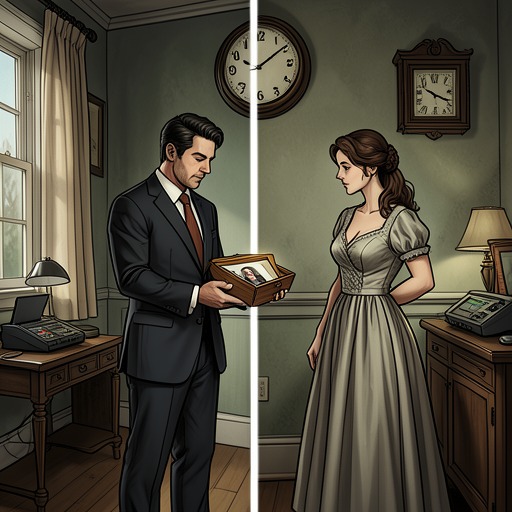
After Mishka’s death, Katerina asks Count Alexander Ilyich Rostov to remember him. Returning to his chair, he opens Mishka’s legacy: a small, roughly bound volume entitled Bread and Salt, its cover worked by a dedicated amateur. Tucked into the title-page seam is a photograph taken in 1912 at Count Alexander Ilyich Rostov’s insistence. The young Count stands in a top hat, moustache extending beyond his cheeks; Mishka beside him looks ready to sprint out of the frame. Mishka had once been chagrined by the photograph, yet had kept it all those years. The image thus records both a friendship and a small disagreement about being preserved in an image.
As Count Alexander Ilyich Rostov reads the book, its literary references bring Mishka’s character back to him: the project has the same feistiness he recognizes in his friend. A passage from The Brothers Karamazov recalls the dying boy Ilyushechka, whose final request is that bread be crumbled on his grave so sparrows will come and he will not lie alone. Count Alexander Ilyich Rostov breaks down. He grieves for Mishka, but also for himself: despite the other relationships in his life, Mishka’s death means that the last person who knew him as a younger man is gone. The photograph and book preserve evidence of their shared past, but they cannot make its witness live again. Katerina’s charge to remember is therefore both a comfort and a burden: the object survives, and someone must remain to read it.
Returning to a Changed Home
When Count Alexander Ilyich Rostov eventually reaches the old family home, the mansion has burned to the ground. Its remains are two tilting chimneys at opposite ends of a clearing, with ash still dusting the ground. The return brings the loss of possessions to its starkest scale: not a selected heirloom or a crowded room, but the home itself reduced to ruins.
Yet he does not respond with shock, indignation, or despair. His smile is wistful and serene, and the narrative makes his ease conditional on expecting nearly every aspect of the past to have changed. The ruined house cannot restore the life once centered there, any more than the scissors or the photograph can restore the people associated with them. But return need not fail simply because it cannot recreate what was. Across the novel, possessions keep memory close, expose the limits of material consolation, and pass fragments of the past into new hands. The final homecoming gives that pattern its clearest form: the past remains meaningful without remaining intact.